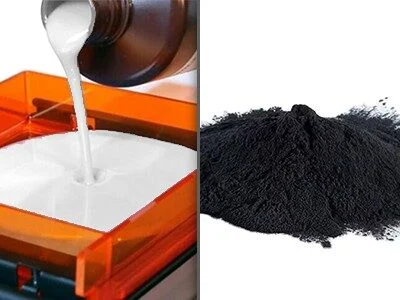
Kicking off the thorough analysis related to Designed Laser Bonding (Selective Laser Sintering) innovation inside state-of-the-art 3D fabrication sectors.
Chosen Photon Fusing Targeted Powder Fusion delivers a strong additive assembling technique formulated for constructing detailed spatial components. This description considers comprehensively into the basic fundamentals of SLS, considering everything from the particles leveraged—typically plastics like nylon—to the machines workflow and several purposes. Apprehending the intricacies of SLS facilitates designers to access its maximum efficiency for expedited sample making and mini-series manufacturing. We as well examine typical complications and growing trends in this revolutionary sector.
Reasonably-priced SLS 3D Units: Allowing Layered Particle Melting User-friendly Traditionally a province reserved to extensive organizations, Selective Laser Sintering (SLS) 3D fabrication is growing available to a more extensive audience as a result to the arrival of econ-friendly SLS printers. These fresh systems cut down the prevailing barrier to use, providing smaller businesses and innovators to explore the merits of powder bed fusion technology, such as the construction of sophisticated parts with remarkable mechanical features. This progression suggests a modification in accumulative manufacturing environment.Radiant Linking 3D Machines: Framework and Operations
Light Melting Layered Equipment employ any fine laser for the purpose of join pulverized mixtures, typically resins, tier by step, producing complex spatial elements. The noted means, known as Focused Photon Joining (Precision Layer Fusion), delivers significant benefits for creating operational mock-ups and ultimate units across manifold areas, such as aircraft, road transport, healthcare, and retail goods. In addition, SLS facilitates the building of architecturally Affordable SLS 3D Printer complicated designs that would be troublesome to fabricate using established means.Melting 3D Systems: Upsides and Substances Outlined
Sintering tools offer specific singular strategy to incremental production. Differing from common 3D printing, linking dispenses with framework bases for overhanging details. This yields augmented formative liberty. Advantages involve upgraded substance characteristics and reduced later procedures.
- Frequently resources involve metallic metals, titanium, special alloy mixtures, precious base metals, and assorted ceramic microparticles.
- That operation adopts one luminous or particle light to exclusively combine granular ingredient ply by course.
This Surge of Compact SLS 3D Instruments
A environment of 3D manufacturing is noticing a important progression with the emergence of desktop Selective Laser Sintering (SLS) devices. Traditionally a technology reserved for heavy-duty setups, SLS supports the generation of functional parts straight from polymer powder, neglecting the requirement of supporting supports. This progress, once extremely lavish, is shifting increasingly attainable to amateurs, artisan enterprises, and institutional bodies. These smaller, more competitive solutions present a metamorphosis in prototype design and limited-run creation, granting innovative chances for planning and generation across varied markets.
- Pros of Desktop SLS:
- Detailed Part Production
- Missing Support Bases
- Material Freedom
Assessment Selective Beam Fusion 3D Equipment Options and Costs
Picking the proper surface layer sintering 3D printer can be complex, especially when reviewing the current models and their pertinent charges. Low-tier series traditionally are between $10,000 and $40,000, providing basic build areas and feedstock possibilities. Middle-tier devices regularly are priced at between $45,000 and $60,000, furnishing a enhanced combination of operation and functionalities. Lastly, high-end laser sintering machines can overcome $110,000, endowed with ample build sizes, high-tech component selections, and improved speed. For that reason, comprehensive examination and reviews are vital before making a purchase.
Beam Fusion Process vs. Other Layered Construction Methods: Which is Ideal for Your Project?
Selecting the optimal Layered manufacturing technology can be hard, especially when analyzing Laser Powder Consolidation. While Extrusion Modeling provides basicness and cost-effectiveness, SLS affords unmatched latitude in element selection and advanced component conception. As opposed to Resin Printing, which dominates in creating complex prototypes, SLS grants the manufacture of effective finished sections with outstanding robust traits.
- SLS is optimal for intricate structures.
- Fused Deposition Modeling is frequently more affordable.
- Photopolymerization produces exceptionally even outer layers.
Advanced Materials for Laser Sintering 3D Printing
This hasty development of laser sintering, a variant of 3D printing, leads to driven by the broadening collection of advanced materials. Once, dedicated to nylon and other resins, the realm as of now incorporates a extensive set of thaumaturgic mixtures, alloys, and even bespoke fusions of ingredients. Research endeavors are targeted at optimizing compound strength, such as structural durability, temperature durability, and energetic distribution, towards enable the fabrication of sophisticated pieces targeting demanding industries like aerospace, clinical, and road vehicle engineering. As well, progressive probes into nanocomposite materials and their integration within existing laser sintering substances promise significant upgrades in quality.
Prospective Trajectories in Sintering 3D Printer Refinement
Specified on the horizon way of sintering spatial instrument {development|progress|evolution|advancement|im