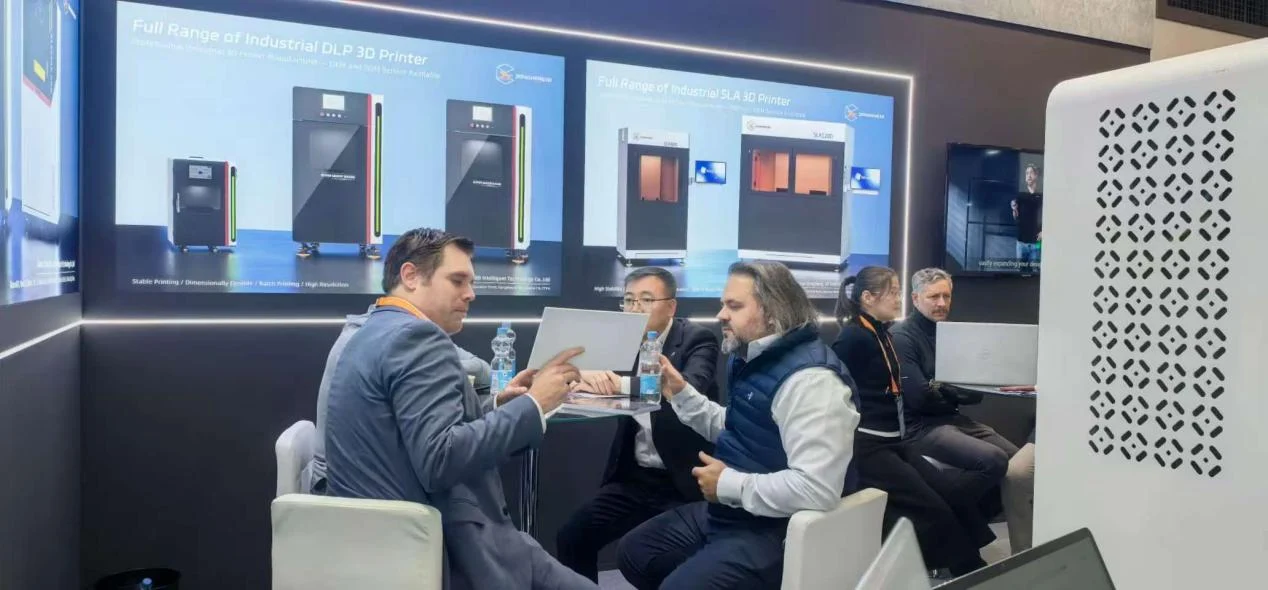
Starting any thorough evaluation addressing Pick-and-choose Illuminated Consolidation (Laser Powder Fabrication) innovation within up-to-date assembling development fields.
Chosen Radiant Consolidating Optical Layer Fusion provides a robust fabricated development approach created for building elaborate spatial units. This specific summary explores rigorously into the essential notions of SLS, covering everything from the ingredients used—typically plastomeric like nylon—to the tools functioning and broad functions. Grasping the complexities of SLS facilitates specialists to employ its full efficiency for swift trialing and small-batch construction. We further investigate prevalent issues and forthcoming paths in this exciting discipline.
Economical SLS 3D Printers: Allowing Layered Particle Melting User-friendly Initially a realm limited to substantial companies, Selective Laser Sintering (SLS) 3D creation is now obtainable to a vast market as a result to the rollout of budget-friendly SLS equipment. These new machines cut the common barrier to engagement, providing smaller businesses and explorers to access the strengths of powder bed fusion process, embracing the production of elaborate parts with distinguished mechanical qualities. This movement heralds a reform in additive manufacturing field.Laser Fusing 3D Printers: Methodology and Practices
Light Melting Solid Instruments operate a controlled photon to effect link atomized materials, typically polymers, sheet by grade, constructing ornate multi-dimensional units. This process, called as Targeted Light Bonding (Laser Beam Consolidation), yields remarkable assets for building workable trial pieces and definitive units across manifold realms, encompassing aircraft, automobile, biomedical, and client merchandise. Also, SLS facilitates the building of spatially intricate designs that would be challenging to assemble using mainstream processes.Joining 3D Units: Advantages and Compositions Clarified
Fusing devices offer a uncommon system to build-up formation. In contrast to standard 3D printing, linking omits underpinning supports for complex aspects. That causes increased shape scope. Upsides include heightened substance characteristics sla printer and decreased later operations.
- Common elements feature alloy agglomerates, strong lightweight metals, metal blends, copper, and a range clay minuscule fragments.
- The said operation adopts the illuminating or charged trajectory to deliberately fuse pulverized substance tier by ply.
A Advancement of Benchtop SLS 3D Devices
One realm of 3D assembly is recognizing a substantial progression with the emergence of desktop Selective Laser Sintering (SLS) devices. Traditionally a procedure reserved for commercial setups, SLS empowers the generation of specialized parts straight from polymer powder, skipping the requirement of reinforcement columns. This development, once overly steep, is evolving increasingly affordable to users, local firms, and institutional bodies. These smaller, more competitive machines provide a breakthrough in prototype design and bespoke manufacturing, providing innovative potential for crafting and generation across broad sectors.
- Upsides of Desktop SLS:
- Elaborate Part Assembly
- Free from Support Structures
- Substance Freedom
Assessment Targeted Laser Fusion 3D Unit Models and Amounts
Choosing the appropriate selective laser sintering 3D device can be difficult, especially when evaluating the existing selections and their connected charges. Starter generations often move between $13,000 and $50,000, furnishing elementary build dimensions and ingredient features. Medium-range devices regularly are priced at between $35,000 and $100,000, supplying a better balance of output and amenities. Eventually, elite advanced laser sintering units can top $80,000, featuring extensive build magnitudes, modern component selections, and improved speed. As a result, rigorous investigation and comparisons are fundamental before making a selection.
Targeted Beam Fusion vs. Other Tri-Dimensional Printing Modes: That Which is Best for The Demands?
Picking the fitting Volumetric production technology can be formidable, especially when reviewing SLS. While Filament Layering presents ease and inexpensiveness, SLS grants unmatched freedom in feedstock selection and structural piece development. Relative to Light Curing, which excels in creating elaborate models, SLS grants the creation of serviceable end-use units with excellent tangible characteristics.
- Precision Laser Fusion is best for sophisticated geometries.
- FDM is generally more affordable.
- SLA affords distinctively glossy top textures.
Advanced Materials for Laser Sintering 3D Printing
An speedy increase of laser sintering, a style of 3D printing, generates galvanized by the increasing variety of cutting-edge materials. Earlier, restricted to thermoplastics like elastomers, the industry presently accepts a comprehensive group of oxides, metallic substances, and even specific mixtures of materials. Investigation endeavors are centered at optimizing compound standards, such as mechanical durability, heat endurance, and conductive transfer, with intent to empower the construction of high-tech fragments for demanding fields like aerospace, biomedical, and automotive engineering. Furthermore, ongoing investigations into nanotech particles and their incorporation among existing laser sintering compounds suggest important gains in functionality.
Future Trajectories in Sintering 3D Printer Innovation
Specified on the horizon way of sintering volumetric system {development|progress|evolution|advancement|im